From Heritage to Hazard:
Applying 3D AI to Disaster Response
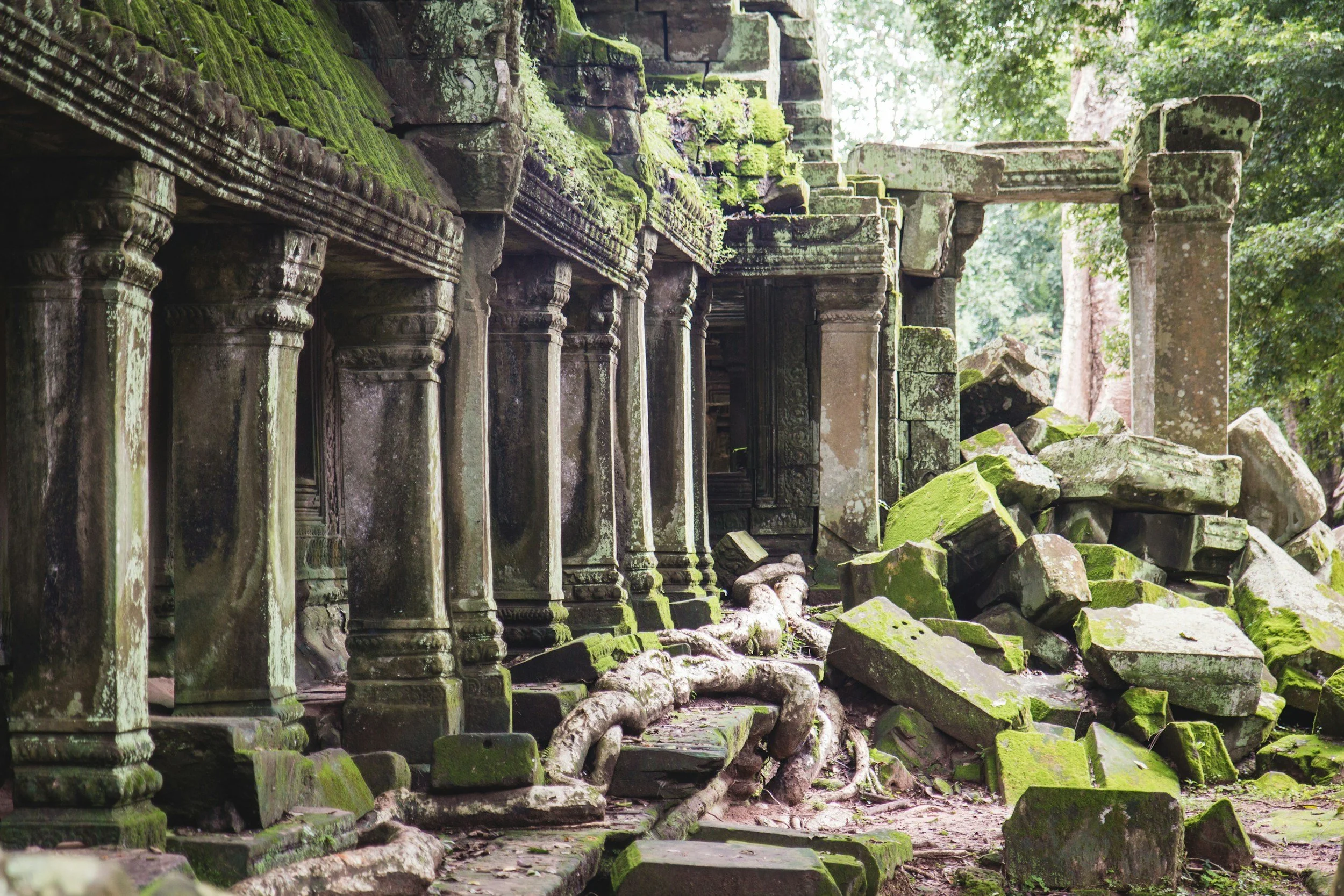
How technologies built for cultural preservation are finding new purpose in crisis environments.
For much of the past decade, advances in 3D imaging, spatial computing, and artificial intelligence have been closely associated with cultural heritage.
Researchers, museums, archaeologists, and conservation specialists have used these technologies to document fragile artefacts, reconstruct lost environments, and create immersive experiences that allow people to engage with history in new ways. High-resolution 3D capture has enabled the preservation of cultural assets that may otherwise have been vulnerable to decay, conflict, environmental change, or simple passage of time.
Yet an interesting transition is now taking place.
Many of the same technologies originally developed for preservation and interpretation are finding applications in a very different environment: disaster response and resilience.
At first glance, documenting a medieval cathedral and assessing a flood-damaged building may appear to have little in common. In practice, however, both activities involve understanding complex environments from incomplete, uncertain, and often fragmented information.
The tools may be the same.
What changes is the urgency of the decisions they support.
Shared Challenges Across Sectors
Whether working in heritage preservation or disaster management, professionals often face remarkably similar technical challenges.
Information is rarely complete.
Structures may be inaccessible.
Evidence can be fragmented.
Time and resources are limited.
Decisions must often be made despite uncertainty.
Common challenges include:
Incomplete or degraded information
The need to understand spatial relationships
Interpretation of structural condition
Limited access to affected environments
Constraints on time and resources
Significant consequences arising from error
In heritage contexts, uncertainty influences interpretation and conservation planning.
In disaster response, uncertainty influences safety, resource allocation, and operational priorities.
The underlying challenge remains the same: making informed decisions when perfect information is unavailable.
This is precisely where technologies such as 3D capture, computer vision, machine learning, and digital twins can provide value.
From Representation to Action
Historically, much of the focus within digital heritage has been on representation.
3D models have been used to visualise artefacts, reconstruct historical environments, support research, and engage public audiences.
These applications remain important.
However, disaster environments require a different emphasis.
The objective is no longer simply to represent reality.
It is to support action.
In post-disaster scenarios, 3D models can contribute to:
Rapid situational awareness
Structural damage assessment
Resource prioritisation
Risk identification
Multi-agency coordination
Recovery planning
The same underlying capability, capturing and reconstructing spatial information, takes on an operational role.
A digital model becomes more than a visual asset. It becomes a decision-support tool.
This transition reflects a broader trend across AI and spatial technologies: moving from descriptive systems towards systems that actively support operational outcomes.
Why 3D and AI Matter in Crisis Contexts
Traditional damage assessment processes often rely upon site inspections, written reports, photographs, and manual measurements.
These approaches remain valuable and will continue to play an important role.
However, they also present challenges.
Information may be difficult to share between teams.
Site access can be hazardous.
Conditions can change rapidly.
Repeated visits may be impractical.
Most importantly, critical decisions often need to be made before complete information is available.
3D capture technologies provide an alternative approach.
Using drones, handheld scanners, mobile devices, or photogrammetric methods, responders can rapidly create spatial records of affected environments.
When combined with AI-supported analysis, these datasets can help organisations:
Collect information more rapidly
Improve consistency of documentation
Enable remote assessment
Facilitate collaboration across locations
Reanalyse environments as new questions emerge
Create auditable records for future review
Importantly, the objective is not to automate decision-making.
The objective is to improve the quality of information available to human experts operating under pressure.
The Growing Importance of Digital Twins
One area receiving increasing attention is the role of digital twins within disaster resilience.
A digital twin is more than a 3D model.
It represents a dynamic digital representation of an asset, environment, or system that can incorporate multiple data sources over time.
Within disaster response, digital twins can help organisations:
Compare pre- and post-event conditions
Monitor evolving damage
Simulate recovery scenarios
Coordinate multiple stakeholders
Support long-term reconstruction planning
Many of the techniques pioneered within heritage preservation, high-fidelity reconstruction, spatial analysis, semantic modelling, and historical comparison, are directly relevant to these applications.
This illustrates how innovation often moves between sectors in unexpected ways.
Technologies developed to preserve the past can help organisations prepare for the future.
Human Expertise Remains Central
Despite advances in AI and automation, disaster response remains fundamentally a human activity.
Technology can provide information.
It can accelerate analysis.
It can identify patterns and highlight anomalies.
However, professional judgement remains essential.
Engineers, emergency planners, responders, local authorities, and community stakeholders all contribute knowledge that cannot be captured through algorithms alone.
This is why human-in-the-loop approaches remain critical.
Effective systems should:
Make uncertainty visible
Support transparent decision-making
Provide explainable outputs
Allow expert review
Augment rather than replace professional expertise
The goal is not autonomous response.
The goal is informed response.
A Natural Evolution, Not a New Direction
For organisations already working with 3D imaging, AI, XR, and digital reconstruction, disaster resilience is not a departure from existing expertise.
It is an extension of it.
The same principles continue to apply:
Combine data-driven analysis with domain knowledge
Design for usability in real-world environments
Make uncertainty explicit
Support collaboration
Maintain human oversight
What changes is the context.
In heritage applications, technology helps preserve cultural memory.
In disaster response, it helps protect people, infrastructure, and communities.
The underlying challenge remains understanding complex environments under uncertainty.
Final Thought
The technologies used to preserve the past are increasingly being used to protect the present.
As 3D imaging, AI, and spatial computing continue to mature, their value will be defined not simply by how accurately they represent the world, but by how effectively they help organisations understand, manage, and respond to it.
The future of these technologies lies not only in documentation, but in decision support.
And in environments where uncertainty is unavoidable, better information can make all the difference.