Introducing DRIFT: A New Approach to Disaster Intelligence
Combining AI, 3D imaging and Earth observation to support better decisions in uncertain environments
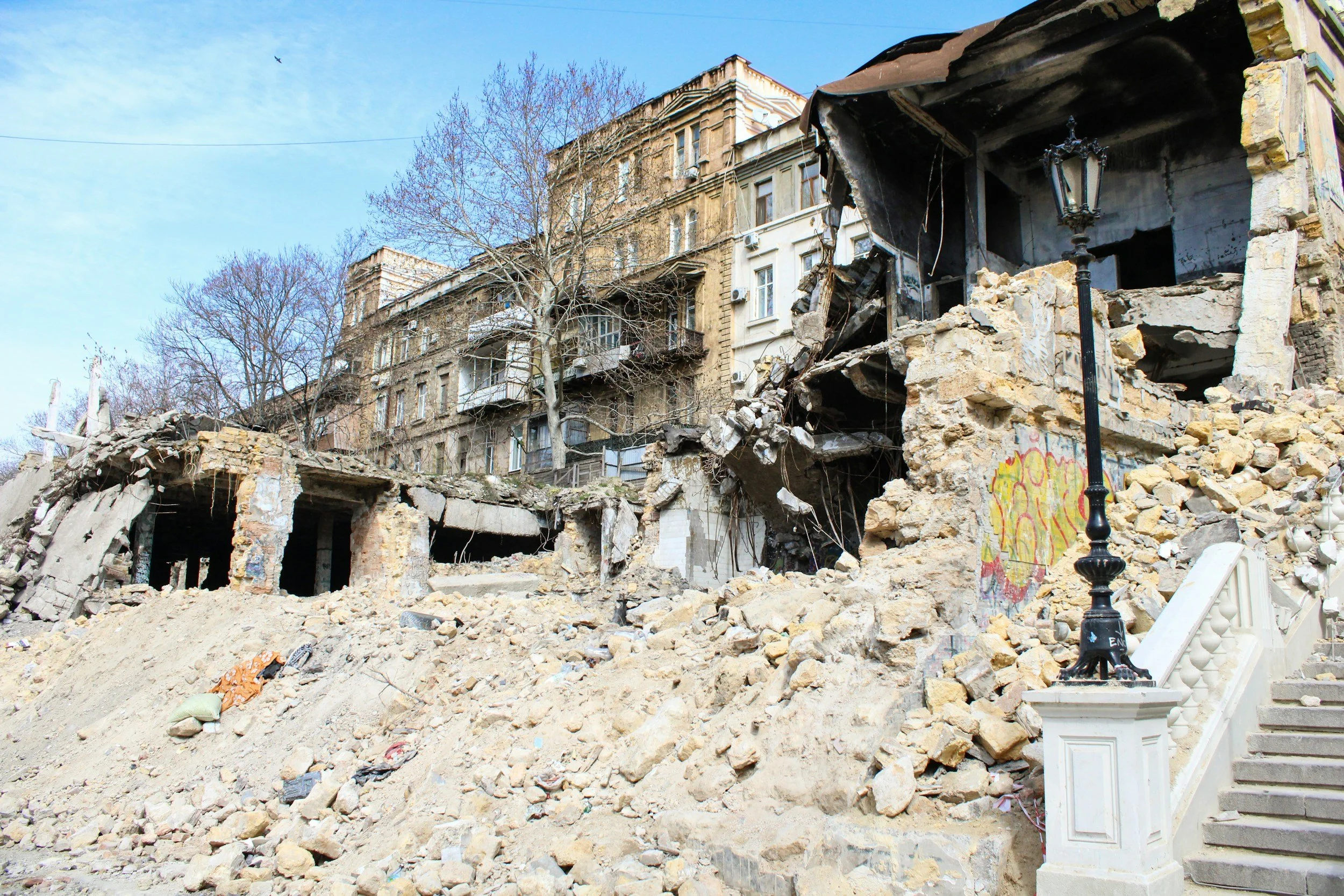
The most difficult decisions are often made when the least information is available.
Following a major disaster, emergency responders, governments and humanitarian organisations must quickly understand what has happened, where the greatest risks exist and how limited resources should be prioritised.
Yet the environments they operate in are among the most challenging for any technology system.
Buildings may be damaged or inaccessible. Communications networks may be disrupted. Existing information may be outdated. Weather conditions may limit visibility. Ground reports may be incomplete or inconsistent.
At the same time, modern disasters generate more data than ever before.
Satellite imagery, drone surveys, photographs, sensor networks, geographic information systems and community reports all provide valuable insight. The challenge is no longer simply collecting information.
The challenge is transforming fragmented observations into a reliable understanding of a changing environment.
Over the past three articles, we have explored three fundamental challenges facing AI in disaster resilience:
how systems operate when information is incomplete;
how sensitive data should be governed responsibly;
how AI can earn trust in high-consequence environments.
These are not separate concerns. They are interconnected engineering challenges.
They also highlight the need for a different approach to disaster intelligence: one that combines multiple sources of evidence, communicates uncertainty clearly and supports human expertise rather than attempting to replace it.
This is the thinking behind DRIFT.
From Data Collection to Situational Understanding
Traditional disaster assessment often relies on individual sources of information.
Satellite imagery can provide broad geographical coverage. Ground teams can provide detailed observations. Existing maps and infrastructure records provide historical context.
Each source is valuable.
However, each source also has limitations.
Satellite imagery may show the scale of damage but lack detailed context. Ground inspections may provide accuracy but cover only a limited area. Historical records may be useful but may not reflect current conditions.
The challenge is not choosing one source over another.
It is understanding how they work together.
DRIFT is built around the principle that effective disaster intelligence requires integration across multiple forms of evidence.
Rather than treating each dataset as an isolated input, a more effective approach is to create a connected understanding of the environment.
This means combining:
Earth observation data for large-scale awareness;
3D capture for detailed spatial understanding;
artificial intelligence for analysis and synthesis;
contextual information from existing records and expert knowledge.
The goal is not simply to generate more information.
It is to help decision-makers understand what that information means.
Combining Different Perspectives of the Physical World
The physical world is complex.
No single sensor, model or dataset can capture every aspect of a changing environment. Different technologies provide different perspectives.
Earth observation provides scale.
Satellite imagery enables rapid assessment across large geographical areas, allowing organisations to identify affected regions and monitor changes over time.
However, satellite data alone cannot always answer the detailed questions required during emergency response.
A building may appear damaged from above, but understanding the severity and implications of that damage requires additional context.
This is where 3D imaging becomes valuable.
Three-dimensional capture provides a richer representation of physical spaces, allowing structures, landscapes and environments to be analysed in greater detail.
A 3D reconstruction can preserve evidence of a damaged structure, support remote assessment and enable experts to examine conditions without always needing immediate physical access.
Artificial intelligence provides the link between these different sources.
Rather than replacing observation, AI can help organise, compare and interpret large volumes of information that would be difficult to process manually.
This combination creates something more valuable than any individual technology alone.
It creates understanding.
Moving from Detection Towards Decision Support
Much of today's AI capability focuses on detection.
Can a system identify an object?
Can it classify an image?
Can it recognise a pattern?
These capabilities are valuable, but disaster environments require a broader question:
What does this information mean for the decisions that need to be made?
A damaged road is not simply an object to identify. It may affect emergency access, evacuation routes or supply chains.
A damaged building is not simply a classification result. It may influence whether an area is safe to enter or where resources should be allocated.
A changed landscape is not simply an image difference. It may indicate emerging risks.
This is where decision intelligence becomes important.
The role of AI should be to support experts by bringing together relevant evidence, highlighting important changes and helping prioritise attention.
The final decision remains with people who understand the operational context.
This human-centred approach recognises a simple reality: complex environments require judgement.
AI can process information at a scale and speed beyond human capability.
Humans provide experience, contextual understanding and accountability.
Together, they create stronger outcomes.
Designing for Trust from the Beginning
Technology used during a crisis must earn trust before it is needed.
A system introduced during an emergency cannot rely on users accepting its recommendations without understanding how those recommendations were generated.
This means trust must be designed into the system from the beginning.
For DRIFT, this means considering:
where information originated;
how different datasets have been combined;
how reliable different sources are;
where uncertainty remains;
how users can validate outputs.
Transparency is not simply a technical feature.
It is essential for effective decision-making.
A responder needs to understand not only what an AI system suggests, but why it suggests it.
Similarly, when information is incomplete, the system should communicate those limitations rather than creating false confidence.
In uncertain environments, knowing what is not known can be just as important as knowing what is known.
Collaboration as a Foundation for Resilience
Disaster resilience is not something that can be achieved by one organisation or one technology.
Effective response depends on collaboration between:
emergency services;
government agencies;
researchers;
technology providers;
international partners;
local communities.
Different organisations bring different expertise and different information.
The challenge is creating systems that enable collaboration while respecting issues such as data governance, sovereignty and security.
This is particularly important as disasters increasingly require international cooperation.
A flood, earthquake or wildfire may involve organisations operating across different jurisdictions, each with their own data standards and responsibilities.
Future disaster intelligence systems will therefore need to be designed not only for technical performance, but for interoperability.
The ability to connect knowledge across organisations may become one of the most important capabilities in future resilience planning.
Beyond Response: Building a Foundation for the Future
Although disaster response is an immediate priority, the value of improved intelligence extends beyond the emergency itself.
The same technologies that help assess damage after an event can also support preparation before one occurs.
Better understanding of physical environments can contribute to:
infrastructure resilience planning;
climate adaptation;
risk modelling;
urban development;
heritage preservation;
long-term recovery.
This reflects a wider shift in how we think about resilience.
The objective is not simply to respond faster after disasters happen.
It is to build systems, environments and communities that are better prepared beforehand.
Digital representations of the physical world, combined with AI-enabled analysis, have the potential to support this transition from reactive response towards proactive resilience.
Final Thought
Disaster intelligence is ultimately about understanding complex environments when certainty is impossible.
The future of AI in this field will not be defined by systems that simply process more data or produce faster predictions.
It will be defined by systems that combine evidence responsibly, communicate uncertainty clearly and support people making difficult decisions.
DRIFT represents an approach built around these principles: bringing together AI, 3D imaging, Earth observation and human expertise to create a richer understanding of the world around us.
The most valuable technologies are not those that attempt to remove humans from the decision-making process.
They are the ones that help people see more clearly, understand more quickly and make better decisions when they matter most.