Understanding the critical window where information shapes outcomes.
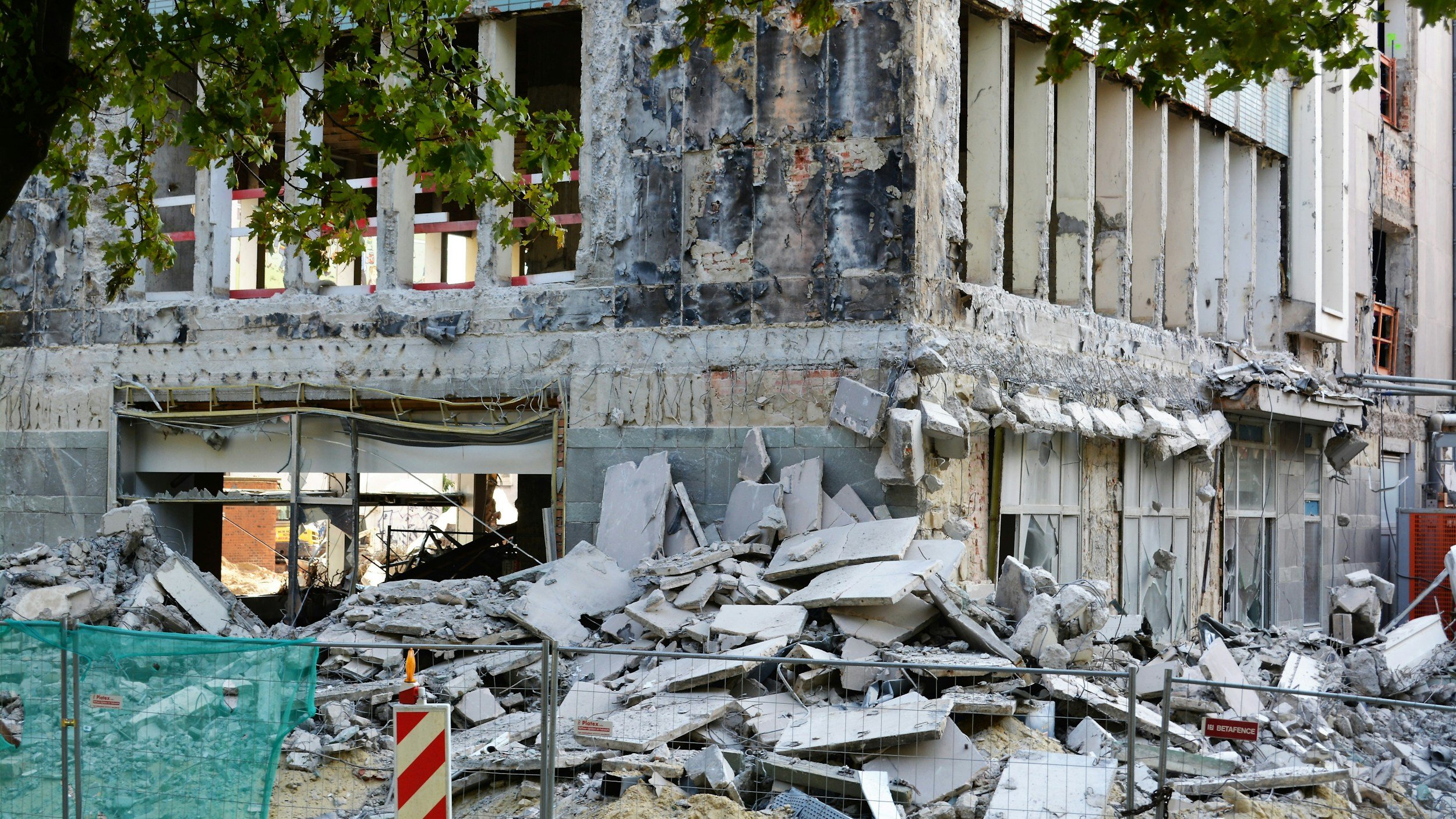
When disaster strikes, whether through flooding, wildfire, earthquake, storm damage, industrial accidents, or infrastructure failure, the first 72 hours are often the most consequential.
Decisions made during this period can influence immediate safety outcomes, the effectiveness of emergency response, the allocation of resources, and the trajectory of recovery efforts that may continue for months or years.
Yet these decisions are rarely made with complete information.
Responders must operate in environments characterised by uncertainty, disruption, and rapidly changing conditions. The challenge is not simply gathering data. It is generating a sufficiently accurate understanding of the situation quickly enough to support action.
In this context, information becomes a critical resource.
And speed becomes a force multiplier.
The Information Gap
One of the most persistent challenges in disaster response is the gap between events occurring on the ground and decision-makers understanding what has happened.
Immediately following a disaster, key questions emerge:
Which structures remain safe?
Where are the greatest risks?
Which communities require urgent assistance?
What infrastructure has been affected?
How should resources be prioritised?
Traditional assessment processes rely heavily upon site visits, visual inspections, reports, and manual coordination between teams.
These approaches provide valuable information but can struggle to scale when damage is widespread or access is restricted.
Responders are therefore faced with a difficult balancing act.
They must act before they fully understand the situation.
The Cost of Delay
Information delays have consequences.
When situational awareness develops slowly, organisations may experience:
Increased risk to responders
Inefficient deployment of resources
Delays in rescue operations
Slower recovery planning
Reduced coordination between agencies
At the same time, acting on poor-quality information carries its own risks.
The challenge is not achieving perfect knowledge.
It is obtaining sufficient knowledge quickly enough to support informed decisions.
In disaster management, timely information is often more valuable than exhaustive information that arrives too late.
Creating Shared Understanding
One of the greatest challenges in complex emergencies is ensuring that different teams are working from the same understanding of events.
Emergency services, local authorities, infrastructure operators, engineers, insurers, humanitarian organisations, and government agencies may all be involved in response efforts.
Each organisation brings different expertise and priorities.
Effective coordination depends upon a shared picture of the situation.
Rapid 3D capture and AI-supported processing can help create this common reference point.
The goal is not simply data collection.
It is shared understanding.
When multiple stakeholders can access the same spatial representation of an affected environment, communication becomes more effective and decision-making becomes more consistent.
Technology as an Enabler, not a Replacement
Technologies such as mobile scanning, drone surveys, photogrammetry, and AI-assisted analysis can accelerate information gathering considerably.
These approaches may enable organisations to:
Capture affected environments rapidly
Create accurate spatial records
Support remote assessment
Reduce unnecessary site visits
Preserve evidence for future analysis
However, technology does not replace expertise.
Responders still require local knowledge, professional judgement, and contextual understanding.
The most effective systems support human decision-makers rather than attempting to replace them.
Final Thought
In disaster response, time is not simply a constraint.
It is one of the defining factors influencing outcomes.
The value of AI and 3D technologies lies not in creating perfect models, but in delivering useful insight quickly enough to support action.
Because during the first 72 hours, better information can save time.
And sometimes, it can save lives.